
Velenza BOC
Know what it costs before you quote it.
The real cost of a load or a project arrives weeks after it ends, in a statement that averages everything together.
By then the next one has been quoted on the same stale numbers. Fuel, tolls, insurance and driver pay land in the ledger long after the lane was priced; the subcontractor invoice and the change order live apart from the budget. Velenza computes the cost of each load and each project from the live record, so the CFO and CRO seats re-price first.



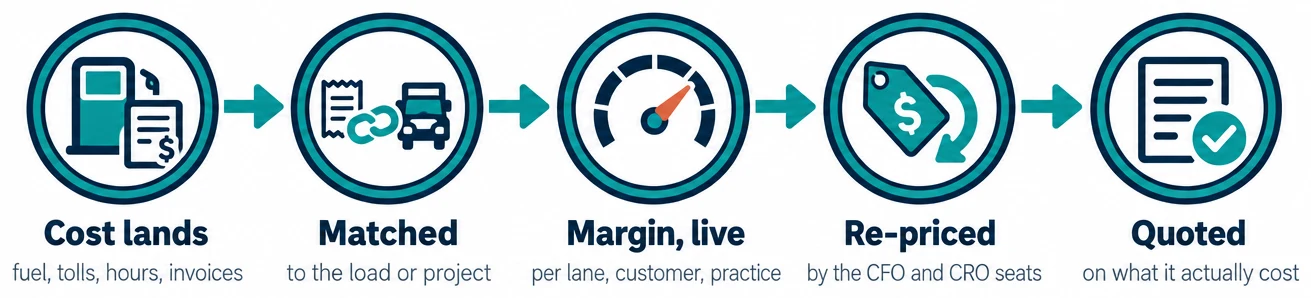
Cost per load, todayFuel, tolls, maintenance, insurance and driver time are matched to their load the day they arrive.

Cost to complete, per projectHours, expenses, subcontractors and change orders are read against the budget as they happen, so a losing project cannot hide in a winning practice.

Re-priced before the next quoteThe CFO and CRO seats see which customer, lane or engagement makes money, and say so before the rate sheet goes out.
What quoting blind costs
A rate table that lags cost by a year eats a year of inflation. A fixed fee quoted from last year’s hours eats the overrun. Nobody finds out until the close.
per mile to run a truck in 2025, up 3.4% in a year.
ATRI, Operational Costs of Trucking, 2026 update (2025 data), as reported by FleetOwner
average project overrun; billable utilization 66.4%, the lowest recorded.
of small firms saw their imported input prices rise in 2025.
Federal Reserve Banks, 2025 Small Business Credit Survey (6,500 firms)
With Velenza the margin is known before the quote, not after the close.
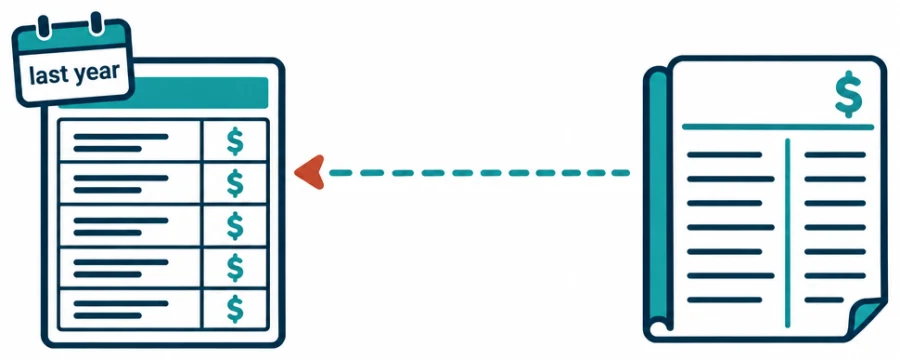
Where today’s tools stop
The dispatch board prices the load from a rate table; the costs arrive weeks later in the ledger. The project system reports hours against budget; the subcontractor invoice and the change order sit elsewhere. The monthly statement comes a week after the close and is a whole-company average. Velenza reads the costs as they land.
Price the next job on what the last one actually cost.
Velenza BOC
How the margin becomes visible.
Should we renew the Northwind lane at last year’s rate?
VelenzaLast year’s rate was $2.41 a mile. On this lane the fleet now runs $2.52 all in: tolls, maintenance and insurance up, detention averaging 1.8 hours a stop. The CFO seat advises a 7% increase or a detention clause; the CRO seat expects the shipper to take the clause.
Why does the Harbor project show 38% margin in the forecast and 19% in the record?
VelenzaThe forecast used last year’s hours. The record shows 212 hours against 160, a $14,000 subcontractor invoice never in the budget, and a change order discussed on 12 June and never raised. The CRO seat recommends raising it now.
Illustrative exchanges. The figures are examples.
In the room: CFO · Luca Pacioli, CRO · Zig Ziglar, COO · W. Edwards Deming

Cost that stays attached
LogisticsFuel, tolls, maintenance and driver pay are matched to the load, so cost per mile is this lane’s number today, not an industry average.
ServicesHours, expenses, subcontractors and change orders are read against the engagement; utilization is read per practice and per person, not averaged across the firm.
Terms are part of the marginPayment terms and quick-pay fees sit inside the margin, so a profitable lane with a slow payer shows as what it is.
Quoting blind, in dollars
A stale rate table3.4% cost inflation on an $11.7M fleet operating cost is about $398,000 a year absorbed; even a 1% mispricing is $117,000.
An overrun10.7% on $5M of fixed-fee work is about $535,000 a year of unplanned cost; halving it keeps $268,000.
A point of utilizationOn 60 billable staff at a $150 rate, each point is about $180,000 a year; the industry runs 8.6 points under SPI’s optimum.
Worked examples on the industry figures, with a 50-tractor fleet at 100,000 miles a year and a $15M firm assumed. Worked examples and industry figures, never a measured result; your figures come from your record.
Where else it applies
Construction (job costing), manufacturing (cost to serve), healthcare practices (payer mix and cost per visit), any firm that quotes before it knows its cost.
Where this case ends
This is the steady state: knowing the margin of the next quote. A business that moves as one is the exception: acting in hours when the margin, the capacity and the customer line up at once.

Take back control of your business
Velenza sits above your existing platforms and connects their records and conversations. Keep what works; choose native capabilities on your terms.
Brandon Meyer | Founder/CEO, Velenza BOC Inc
brandon@velenzaboc.com | www.velenzaboc.com