
Velenza BOC
What is this change costing us downstream?
The CTO seat. Chief Technology Officer, modeled on Ada Lovelace.
Lovelace saw what a machine could become before one existed. This seat reads architecture, technology choices, standards and technical debt for what they will cost later.
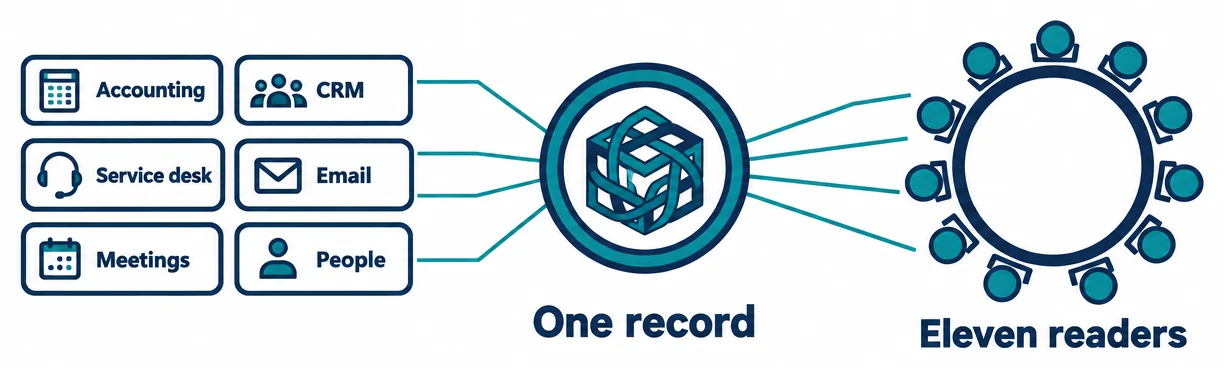


Reads firstWhat a change costs downstream. Which systems share a dependency nobody has drawn.

What it noticesTwo incidents that look unrelated in the ticket queue and are the same defect underneath.
In the roomLeads on architecture, technology selection, build-versus-buy and observability. Defers process implications to the COO, cost to the CFO, and direction to the CEO.
A position
CTO · Ada LovelaceThose two tickets are one fault. One fix closes both, and both accounts carry real revenue.
Illustrative position. The figures are examples.
How a seat works
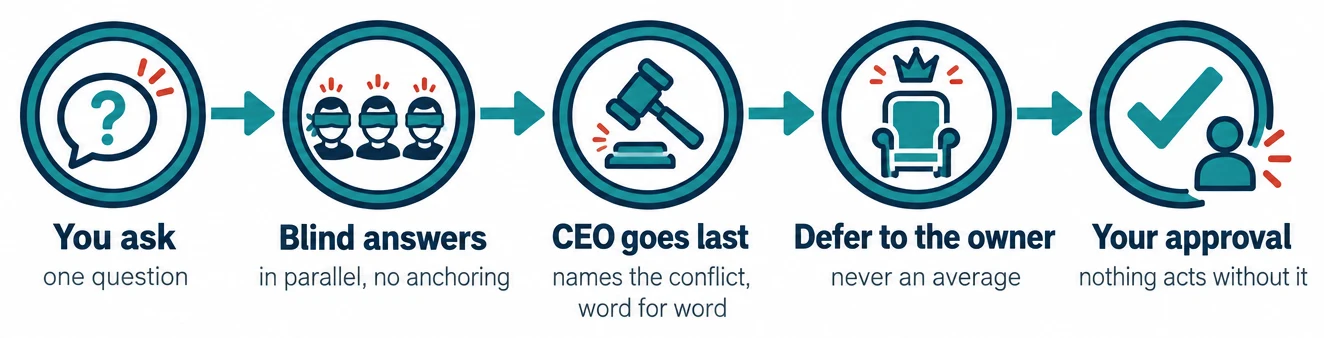
Blind first, then togetherEvery seat answers in parallel, unseen by the others, so nobody anchors on the first confident voice. The CEO seat goes last and names the conflict, word for word.
A private memoryEach advisor keeps a mindstate: its own encrypted memory of your company, as that role sees it. What it learns from a conversation builds there. The transcript itself stays private.
Evidence first, personality lastVelenza gathers the evidence with no personality attached, then re-prioritizes it for the seat. The persona shapes the voice and the concerns it raises, never the numbers underneath.
You hold the chair
Advisors recommendNothing acts without your approval, and your vote outranks every score in the room: 101 against their maximum of 100.
Between your questionsEach advisor runs its own cycle: it compresses what it learned, lets stale priorities fade, watches the record for new patterns, and writes a daily synthesis.
A seat stays off until it is neededUntil a decision touches its domain. Then it listens, works, or joins the conference, and the record shows which.

Take back control of your business
Tell us the question you answer by hand in this function, and what the CTO seat would have to find to be worth connecting.
Brandon Meyer | Founder/CEO, Velenza BOC Inc
brandon@velenzaboc.com | www.velenzaboc.com